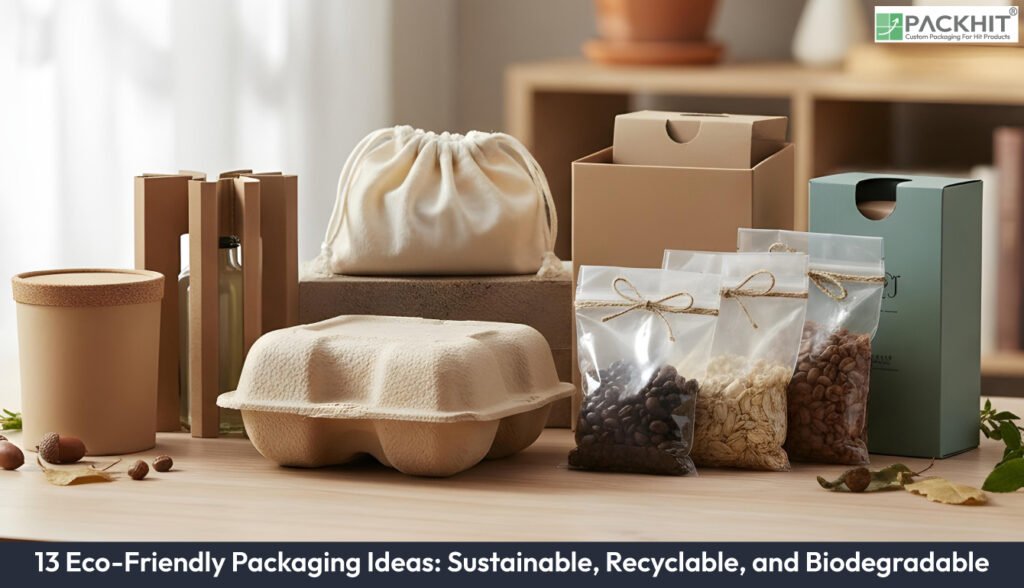
Eco-friendly packaging ideas include sustainable options, such as kraft, cardboard, and corrugated packaging for durability, and recyclable options include compostable, cellulose, and cornstarch-based materials for food-safe, eco-conscious solutions; and biodegradable choices like plantable seed paper, edible wraps, mushroom-based inserts, and seaweed-derived films. These eco-friendly packaging ideas cater to diverse sectors, from e-commerce and retail to food, electronics, and personal care, reducing environmental impact while maintaining functionality.
The 13 eco- friendly packaging ideas are given below:
- Kraft Packaging
- Cardboard Packaging
- Corrugated Packaging
- Corrugated Bubble Wrap (Paper Bubble Wrap)
- Sustainable Packaging
- Stock Paper Tubes
- Compostable Packaging
- Cellulose Packaging
- Cornstarch Packaging
- Plantable Seed Paper Packaging
- Edible Packaging
- Mushroom Packaging
- Seaweed-Based Packaging
- 1. Kraft Packaging
- 2. Cardboard Packaging
- 3. Corrugated Packaging
- 4. Corrugated Bubble Wrap (Paper Bubble Wrap)
- 5. Sustainable Packaging
- 6. Stock Paper Tubes
- 7. Compostable Packaging
- 8. Cellulose Packaging
- 9. Cornstarch Packaging
- 10. Plantable Seed Paper Packaging
- 11. Edible Packaging
- 12. Mushroom Packaging
- 13. Seaweed-Based Packaging
- How do Eco‑Friendly Packaging Solutions Work Across Different Sectors?
1. Kraft Packaging
Kraft packaging uses unbleached wood pulp with fiber lengths of 2.5 to 3.5 mm, giving high tear resistance. It supports recycling through standard paper waste streams across the UK. Kraft packaging prints well with water-based inks, including soy or algae-derived pigments. It is ideal for cartons, sleeves, and mailers for products like cosmetics, specialty foods, and consumer goods. For example, Kraft paper mailers for organic skincare products.
2. Cardboard Packaging
Cardboard packaging is made from layered paperboard, offering rigidity and durability for shipping. It is widely recyclable and can be printed or laminated with eco-friendly coatings. Cardboard packaging works for retail boxes, gift packaging, and subscription kits. For example, cardboard boxes for e-commerce subscription snacks.
3. Corrugated Packaging
Corrugated packaging combines three paper layers with a fluted medium to absorb compression forces. It achieves load ratings of 32 to 44 ECT for shipping protection and contains 70%–100% recycled fiber in UK manufacturing. It is commonly used for transit boxes, subscription packaging, and export pallets. For example, Corrugated boxes for shipping electronics or bulk beverage packs.
4. Corrugated Bubble Wrap (Paper Bubble Wrap)
Corrugated bubble wrap is made from kraft or recycled paper molded into air pockets, providing cushioning like traditional plastic bubble wrap. It is biodegradable and recyclable. It works for fragile products, shipping electronics, and glassware. For example, paper bubble wrap for shipping glass ornaments.
5. Sustainable Packaging
Sustainable packaging broadly includes materials designed to reduce environmental impact, such as recycled plastics, reusable containers, and low-carbon fiberboard. It applies to all sectors from retail to e-commerce, wherever packaging reuse or recycling is feasible. For example, reusable tote bags for e-commerce orders.
6. Stock Paper Tubes
Stock paper tubes are cylindrical containers made from layered recycled paperboard. They are strong, lightweight, and recyclable. They are ideal for posters, cosmetics, specialty foods, or rolled products. For example, paper tubes for shipping rolled art prints or gourmet pasta.
7. Compostable Packaging
Compostable packaging breaks down into biomass, water, and CO₂ under industrial composting conditions. Materials include PLA, bagasse (sugarcane fiber), and starch blends. It meets EN 13432 standards in Europe and is suitable for food containers, films, and single-use wraps. For example, compostable takeout containers for restaurants.
8. Cellulose Packaging
Cellulose packaging derives from regenerated wood pulp and forms transparent films. It allows oxygen permeability while blocking grease and oils. It is compostable in industrial and home settings and suits bakery items, dry foods, and windowed cartons. For example, clear cellulose wraps for pastries or windowed snack boxes.
9. Cornstarch Packaging
Cornstarch-based packaging is made from renewable starch extracted from corn. It is biodegradable and compostable under industrial conditions. Cornstarch packaging is suitable for packing peanuts, loose-fill void fill, and single-use trays. For example, cornstarch is used to pack peanuts for shipping delicate products.
10. Plantable Seed Paper Packaging
Plantable packaging embeds 3 to 5 seed types, such as basil, wildflower, or mint, into the paper pulp. The paper decomposes in soil within 30–60 days after planting. It replaces inserts, tags, and outer sleeves and is ideal for promotional kits, greeting cards, and stationery. For example, seed-infused thank-you cards for subscription boxes.
11. Edible Packaging
Edible packaging uses food-grade polymers such as seaweed extract, rice paper, or whey protein. It dissolves in water or can be safely consumed, reducing single-use waste. It is suitable for sachets, condiment wraps, and portion packs. For example, edible sauce sachets for fast-food or airline meals.
12. Mushroom Packaging
Mushroom packaging grows from mycelium bonded with agricultural waste like hemp hurd. It forms rigid shapes within 5–7 days and is fully compostable at home. It replaces polystyrene inserts for electronics, glassware, and fragile goods. For example, mushroom-based protective inserts for laptops or wine bottles.
13. Seaweed-Based Packaging
Seaweed-based packaging uses fast-growing algae harvested without fertilizers or freshwater. It naturally dissolves in marine and soil environments. Applications include films, sachets, and coatings, targeting single-use plastics in food and personal care. For example, seaweed-based cling films for snack bars or shampoo sachets.
How do Eco‑Friendly Packaging Solutions Work Across Different Sectors?
Eco‑friendly packaging solutions work across different sectors by aligning material performance with sector‑specific constraints such as food contact safety, transit stress, regulatory compliance, and shelf presentation.
- Food and beverage uses compostable and cellulose-based materials that meet EN 13432 and food-contact standards. Examples include bagasse trays for ready meals and cellulose films for bakery wraps.
- E‑commerce and logistics rely on corrugated board and paper bubble cushioning with 32–44 ECT ratings. Examples include recycled corrugated mailers and molded paper void fill for parcel shipping.
- Retail and consumer goods apply kraft board and paper tubes that accept water-based inks; examples include kraft cartons for cosmetics and paper tubes for dry food products.
- Personal care and cosmetics adopt refillable or mono-material packs to simplify recycling; examples include reusable aluminum containers and kraft boxes with paper labels.
- Electronics and fragile goods use molded fiber and mycelium forms that absorb shock without plastics. Examples include mushroom inserts for laptops and molded pulp trays for glass items.
- Hospitality and food service use compostable single-use formats to manage waste volumes. Examples include PLA-lined cups and cornstarch cutlery for takeaway service.