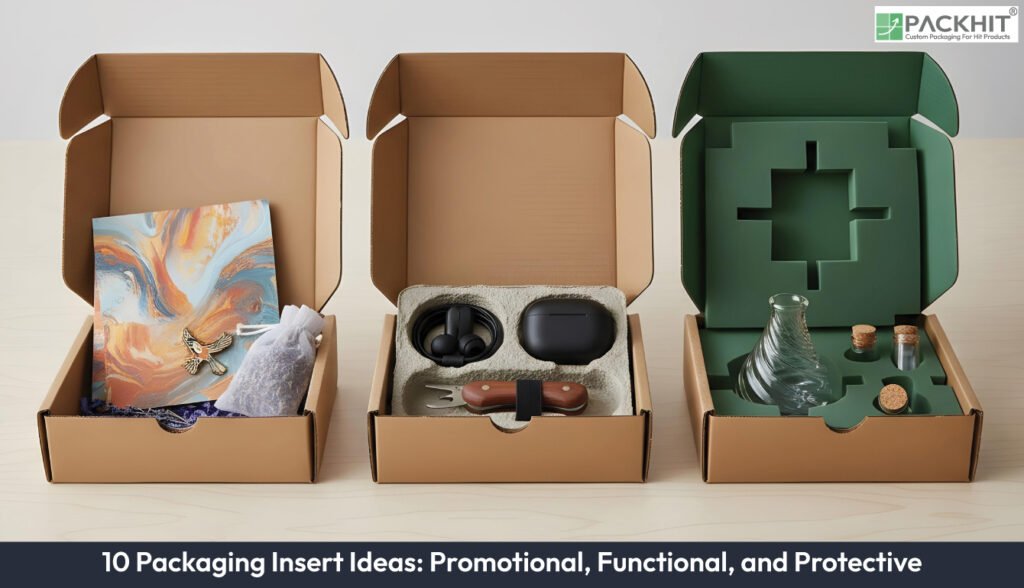
Packaging insert ideas range from promotional items such as thank-you cards, QR code cards, and loyalty reward cards that engage customers and strengthen brand loyalty, to functional inserts like freebies and instruction manuals that add value and guide proper product use. Protective inserts, including cardboard, foam, moulded pulp, blister packs, and bubble wrap sheets, safeguard products during transit, preventing damage and ensuring safe delivery.
10 packaging inserts ideas cover promotional, functional, and protective needs across retail and ecommerce packaging.
- Thank You Cards
- QR Code Cards
- Loyalty Reward Cards
- Freebie Gifts
- Instruction Manuals
- Cardboard Inserts
- Foam Inserts
- Moulded Pulp Inserts
- Blister Inserts
- Bubble Wrap Sheets
1. Thank You Cards
Thank you cards create a direct acknowledgement between the brand and the buyer. They reinforce brand recall through printed logos, brand colours, and short appreciation messages. These cards help build post-purchase trust, especially for first-time customers and subscription orders. They also reduce return anxiety by confirming appreciation immediately after delivery. For example, Glossier includes branded thank you cards in its packaging to create a personal connection with customers and strengthen brand loyalty through a friendly, conversational tone.
2. QR Code Cards
QR code cards connect physical packaging with digital brand assets. They direct customers to product registration pages, setup tutorials, warranty portals, or exclusive online content. QR code cards reduce the need for printed manuals while keeping instructions accessible. They also allow brands to track scan behaviour and measure engagement. For instance, Nike integrates QR codes in product packaging that lead customers to digital product information, authenticity verification, and exclusive brand experiences.
3. Loyalty Reward Cards
Loyalty reward cards introduce structured incentives tied to repeat purchases. They explain point systems, referral rewards, discount thresholds, or membership benefits. These cards encourage customers to create accounts and engage further with the brand, increasing long-term value. A good example is Sephora, which promotes its Beauty Insider loyalty program through packaging inserts that encourage customers to earn points and redeem rewards.
4. Freebie Gifts
Freebie gifts add a small bonus item inside the package, such as samples, stickers, or complementary accessories. They increase perceived order value and reduce buyer remorse. Freebie gifts also introduce customers to other products within the same brand range. For example, lLushoften includes free product samples inside online orders to encourage customers to try new items and drive future purchases.
5. Instruction Manuals
Instruction manuals provide clear, step-by-step guidance on proper product usage. They reduce misuse, minimise product damage, and lower customer support inquiries. Instruction manuals are particularly important for electronics and regulated products to ensure compliance and safe operation. For instance, IKEA is well known for its structured and visual instruction manuals that standardise product assembly across global markets.
6. Cardboard Inserts
Cardboard inserts secure products using rigid, die-cut compartments that prevent movement during shipping. They support different product sizes and are commonly made from recyclable materials to meet sustainability standards. A strong example is Apple Inc., which uses precision-designed cardboard inserts to hold devices securely while maintaining a minimal and premium unboxing experience.
7. Foam Inserts
Foam inserts absorb shock and vibration during transit, making them ideal for fragile items like electronics or glassware. They allow custom-cut cavities to ensure a snug and protective fit, reducing breakage rates. For example, Bose uses moulded foam inserts in its headphone and speaker packaging to protect delicate audio components during shipping.
8. Moulded Pulp Inserts
Moulded pulp inserts are made from compressed recycled fiber shaped to support products securely. They are eco-friendly alternatives to plastic inserts and decompose faster than synthetic materials. These inserts provide cushioning for bottles, appliances, and cosmetic containers. An example is Dell Technologies, which incorporates moulded pulp inserts in its laptop packaging to reduce plastic usage as part of its sustainability initiatives.
9. Blister Inserts
Blister inserts hold products in transparent plastic cavities that offer visibility and tamper evidence. They are commonly used for small retail items such as batteries, tools, or accessories and help reduce theft in open displays. For instance, Duracell uses blister packaging to securely display batteries while preventing tampering in retail stores.
10. Bubble Wrap Sheets
Bubble wrap sheets create an air-filled cushioning layer around products to protect them from impact and surface abrasion. They are suitable for irregular or mixed-product shipments and reduce damage during last-mile delivery. For example, Amazon frequently uses bubble wrap sheets in its fulfilment packaging to safeguard fragile or multi-item orders during transit.