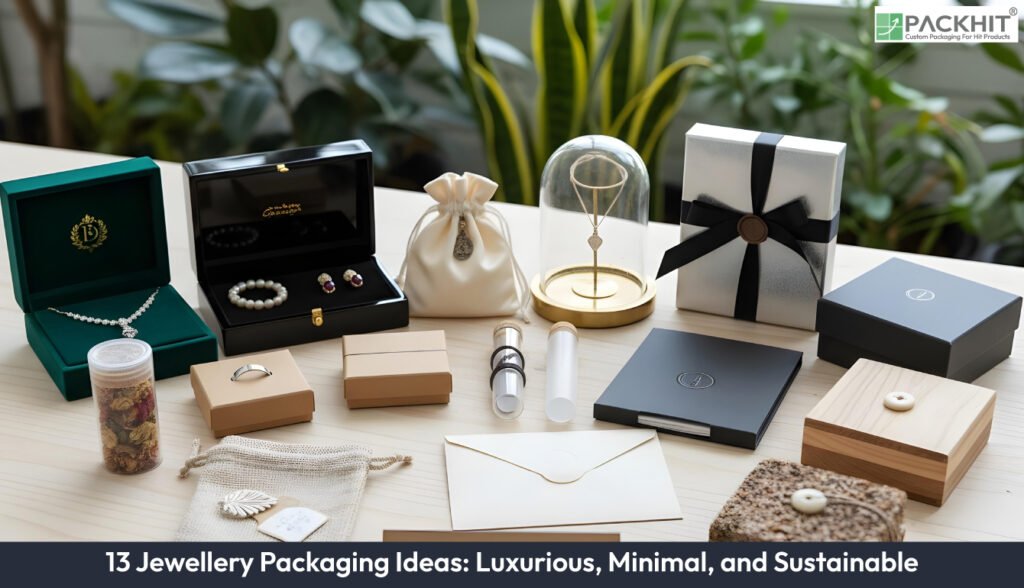
Jewellery packaging combines protection with visual appeal to enhance brand perception and customer experience. Luxurious options like magnetic closure boxes, two-piece boxes, velvet inserts, and rigid drawer designs create a premium presentation while ensuring item stability. Minimalist solutions such as fabric pouches, custom tissue paper, small paper bags, and transparent film boxes offer lightweight, cost-effective, and versatile containment. Sustainable formats, including natural fibre bags, mono-material paper drawer boxes, and reinforced cotton drawstrings, reduce environmental impact and support reuse or recycling. Packaging choices should align with the type of jewellery and sales channel, balancing protection, convenience, and presentation for rings, earrings, and necklaces. Combining structured boxes and soft containment delivers luxury cues while controlling material use and shipping costs. Eco-conscious designs further enhance sustainability without compromising elegance or functionality.
Below are thirteen jewellery packaging ideas that balance luxury, minimalism, and sustainability, offering practical solutions for protection, presentation, and eco-friendly design:
- 1. Magnetic closure boxes with thin-wall board
- 2. Two-piece boxes with telescopic fit
- 3. Velvet inserts with pressure-cut slots
- 4. Rigid drawer boxes with sliding trays
- 5. Shoulder-neck boxes for pendant stability
- 6. Velvet flip-top boxes with integrated hinges
- 7. Fabric pouches with controlled weave density
- 8. Custom tissue paper with adhesive branding seals
- 9. Small paper bags finished with ribbon closure
- 10. Transparent PE film boxes for visual inspection
- 11. Natural fibre bags with stitched drawcords
- 12. Paper drawer boxes with mono-material construction
- 13. Cotton drawstring bags with reinforced seams
- How Does Sustainability Influence Jewellery Packaging Design?
- How Should Jewellery Packaging Formats be Chosen?
- Which Jewellery Packaging Formats Balance Luxury Appeal with Cost Efficiency?
1. Magnetic closure boxes with thin-wall board
Magnetic closure boxes consist of rigid paperboard panels reinforced at fold points and closed using embedded ferrite magnets. A reduced wall thickness lowers material usage without compromising alignment. These boxes support repeated opening cycles, which matters for gifting and storage reuse.
2. Two-piece boxes with telescopic fit
Two-piece boxes separate the lid and base, allowing dimensional tolerance control during manufacturing. A shallow overlap creates visual precision and limits the lateral movement of the insert. They work well for earrings and small necklaces where vertical compression must remain minimal.
3. Velvet inserts with pressure-cut slots
Velvet inserts are die-cut to hold jewellery in fixed positions using friction rather than adhesives. Short-pile velvet reduces lint transfer compared to long-pile variants. Inserts are commonly paired with rigid boxes to prevent movement during transport.
4. Rigid drawer boxes with sliding trays
Rigid drawer boxes consist of an outer sleeve and an inner sliding tray, creating a layered opening sequence. Friction rails guide movement and limit accidental opening. This structure supports heavier items or multi-piece sets.
5. Shoulder-neck boxes for pendant stability
Shoulder-neck boxes include raised side supports that hold necklaces at a fixed angle. This geometry prevents chain tangling and centres the pendant visually. They are commonly used for display photography as well as retail presentation.
6. Velvet flip-top boxes with integrated hinges
Velvet flip-top boxes combine a rigid shell with a fabric exterior and an internal hinge. The hinge angle controls how jewellery is revealed, limiting overextension that could stress chains. Exterior velvet adds abrasion resistance during stacking.
7. Fabric pouches with controlled weave density
Fabric pouches use cotton, linen, or blended fibres stitched into small enclosures for rings or pendants. A medium weave density limits fibre shedding and reduces snagging on prongs or chains. Production costs remain low, particularly in monochrome runs, while tactile softness signals care in handling.
8. Custom tissue paper with adhesive branding seals
Custom tissue paper wraps jewellery or inner boxes, adding a secondary layer of protection against surface contact. Lightweight adhesive stickers replace printed tape, lowering ink coverage while maintaining brand identification. This format integrates easily into both boxes and mailers.
9. Small paper bags finished with ribbon closure
Paper bags scaled for single items reduce excess void space. Ribbon closures replace adhesive flaps, avoiding residue on jewellery boxes placed inside. Paper weight typically ranges between 180 and 250 gsm to maintain shape without lamination.
10. Transparent PE film boxes for visual inspection
Transparent PE film boxes suspend jewellery between two tensioned films. The material allows full visibility while immobilising the item. Film thickness selection determines holding force and resistance to puncture during handling.
11. Natural fibre bags with stitched drawcords
Natural fibre bags use jute, hemp, or unbleached cotton, selected for tensile strength and biodegradability. Stitched drawcord channels outlast glued alternatives and withstand repeated use. The surface texture introduces a restrained, non-gloss finish associated with sustainable packaging.
12. Paper drawer boxes with mono-material construction
Paper drawer boxes use only paperboard components, eliminating mixed-material recycling issues. Friction-fit drawers replace magnets or metal pulls. These boxes align with sustainability targets while retaining a structured form.
13. Cotton drawstring bags with reinforced seams
Cotton drawstring bags rely on reinforced side seams to prevent tearing under load. Drawstrings are often made of braided cotton rather than synthetic cord to maintain material consistency. These bags work as primary packaging or as reusable storage for customers.
How Does Sustainability Influence Jewellery Packaging Design?
Sustainability in jewellery packaging focuses on reducing environmental impact through eco-friendly materials and efficient designs. Using paper-based boxes without lamination, natural fibre pouches, and mono-material constructions makes packaging recyclable and easier to dispose of responsibly. Lightweight and minimalistic formats also reduce shipping weight, lowering carbon emissions during transport, while reusable or durable designs extend the lifecycle of packaging and enhance brand responsibility.
How Should Jewellery Packaging Formats be Chosen?
Jewellery packaging should be tailored to both the item type and how it will be sold. Rings and earrings work well with soft pouches or small boxes when paired with internal restraints to prevent movement, while necklaces need structured designs with fixed geometry to avoid tangling. For direct-to-consumer shipping, lightweight or flat-pack formats reduce shipping costs and protect items in transit, whereas in-store retail displays can use heavier, rigid boxes that enhance presentation and perceived value.
Which Jewellery Packaging Formats Balance Luxury Appeal with Cost Efficiency?
Structured boxes and soft containment formats offer the best balance between luxury cues and cost control. Rigid boxes provide shape stability, protect items, and allow efficient stacking, enhancing the perceived quality of jewellery. Meanwhile, soft pouches and bags reduce material usage and shipping weight, keeping costs low. Many packaging formats, including these thirteen options, also accommodate sustainable materials, combining elegance, practicality, and eco-friendly design.