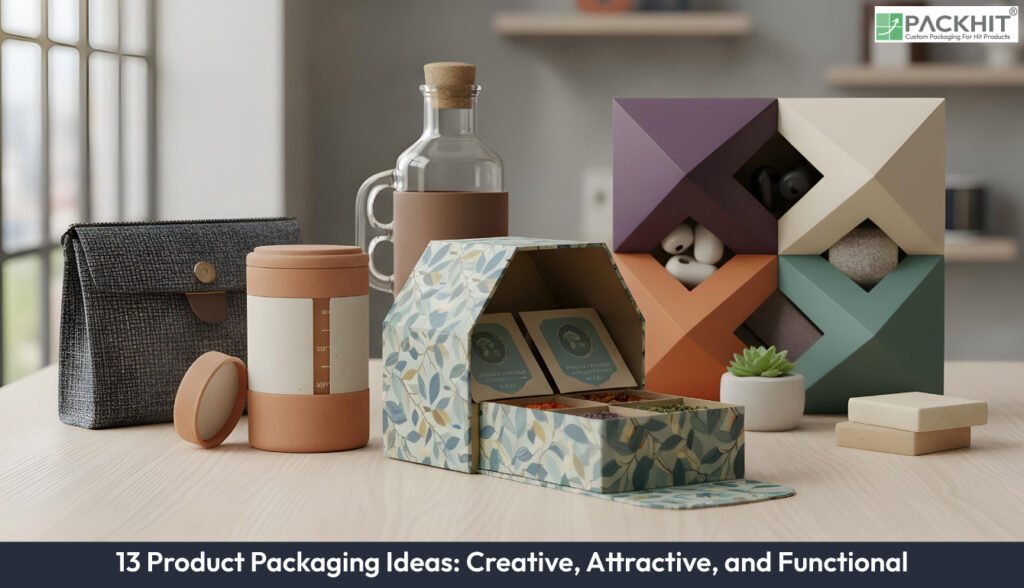
Product packaging ideas refer to structured design concepts used to contain, protect, and present goods in retail and distribution settings. In commercial practice, packaging performs three concurrent functions: visual differentiation at the shelf level, physical protection during handling, and operational support for logistics and use. The ideas discussed below focus on measurable outcomes, improved shelf visibility, clearer information hierarchy, reduced material waste, and improved handling efficiency, while maintaining creative variation across materials, form factors, and interaction models. Each concept integrates visual clarity, practical utility, and purchasing behaviour triggers without relying on decorative excess.
- 1. Minimalist structural packaging
- 2. Eco-conscious material packaging
- 3. Reusable container packaging
- 4. Transparent window packaging
- 5. Modular packaging systems
- 6. Informational hierarchy-driven packaging
- 7. Premium tactile packaging
- 8. Compact space-efficient packaging
- 9. Dual-purpose primary and secondary packaging
- 10. High-contrast shelf-impact packaging
- 11. Industry-specific compliance packaging
- 12. Limited-variation design series
- 13. Sustainable secondary packaging reduction
- How do packaging ideas influence purchase behaviour?
- Where do these packaging ideas apply across industries?
- When should packaging be redesigned?
1. Minimalist structural packaging
Minimalist structural packaging uses reduced colour palettes, limited typography, and high-contrast layouts. Common executions include kraft boxes with single-ink printing and matte-coated cartons with centred labels. This approach shortens visual processing time and lowers ink and substrate costs.
2. Eco-conscious material packaging
Eco-conscious packaging applies recyclable or compostable materials; examples include moulded pulp, uncoated paperboard, and mono-material plastics. Material selection reduces disposal complexity and aligns packaging mass with product weight to limit transport inefficiency.
3. Reusable container packaging
Reusable packaging extends functional life beyond first use. Typical formats include glass jars, metal tins, and rigid polymer boxes. Reuse increases brand recall through repeated exposure and lowers per-use material impact across the container’s lifespan.
4. Transparent window packaging
Transparent window packaging exposes part of the product while maintaining structural enclosure. Applications include food boxes with cellulose film windows and cosmetic cartons with die-cut apertures. Visibility reduces uncertainty at point of sale and lowers return rates linked to expectation mismatch.
5. Modular packaging systems
Modular packaging uses standardised dimensions that interlock or stack. Examples include uniform carton footprints and repeatable insert geometries. Modularity simplifies warehousing, improves pallet density, and supports line extensions without redesigning outer packaging.
6. Informational hierarchy-driven packaging
Information hierarchy-driven packaging prioritises critical data through typographic scale and placement. Primary elements include product name and quantity; secondary elements include instructions and regulatory text. Clear hierarchy reduces scanning time and improves compliance accuracy.
7. Premium tactile packaging
Premium tactile packaging relies on surface treatments rather than ornament. Examples include soft-touch coatings, embossed logos, and uncoated textured paper. Tactile cues communicate quality through material feel without increasing graphic density.
8. Compact space-efficient packaging
Compact packaging reduces unused internal volume. Examples include form-fitted trays and collapsible cartons. Volume reduction lowers shipping costs and improves storage efficiency in both retail backrooms and consumer environments.
9. Dual-purpose primary and secondary packaging
Dual-purpose packaging allows the outer package to act as a storage or display unit after opening. Common implementations include tear-away lids that convert boxes into countertop trays. Functional continuity increases perceived usefulness without added components.
10. High-contrast shelf-impact packaging
High-contrast packaging uses controlled colour opposition and simplified iconography. Typical colour strategies include light backgrounds with dark text or monochrome schemes with a single accent colour. High contrast improves recognition at distances above one metre.
11. Industry-specific compliance packaging
Compliance-focused packaging integrates mandatory information without crowding. Examples include pharmaceutical cartons with regulated font sizes and food packaging with standardised nutrition panels. Structured compliance reduces revision cycles during regulatory review.
12. Limited-variation design series
Limited-variation packaging uses a fixed layout with controlled visual changes; examples include colour-coded flavours or numbered editions. This method maintains brand consistency while supporting product differentiation across a range.
13. Sustainable secondary packaging reduction
Secondary packaging reduction removes non-essential outer layers. Examples include eliminating plastic shrink wrap or replacing multi-layer cartons with single-wall alternatives. Reduction lowers material use and simplifies waste separation without affecting product protection.
How do packaging ideas influence purchase behaviour?
Packaging influences purchase behaviour by controlling visibility, comprehension, and handling. Clear visuals shorten decision time; functional design reduces post-purchase friction. Combined effects increase repeat purchase probability and brand recall under competitive shelf conditions.
Where do these packaging ideas apply across industries?
These packaging ideas apply across food, cosmetics, electronics, and household goods. Food uses transparency and compliance; cosmetics use tactile finishes; electronics prioritise modular protection. Cross-industry relevance stems from shared logistics and retail constraints.
When should packaging be redesigned?
Packaging redesign is warranted when damage rates rise, regulatory requirements change, or shelf recognition declines. Measurable triggers include increased returns, packaging-related complaints, and declining sell-through despite stable product quality.
Product packaging ideas that balance creativity, attractiveness, and function rely on material logic, structural clarity, and information control. When these factors align, packaging becomes a commercial tool that supports sales, logistics, and long-term brand recall without unnecessary complexity.